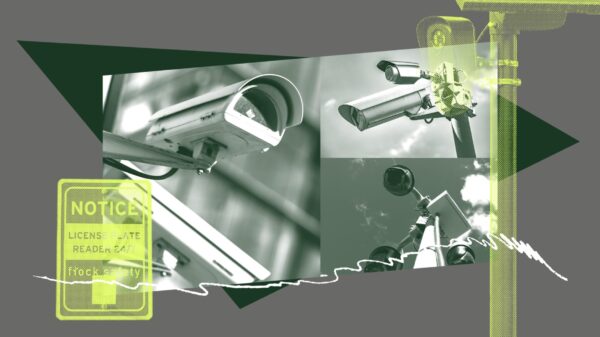
Wisconsin is showing that the expansion of mass surveillance is not inevitable. Technology companies cannot simply enter our communities, sell police departments tools that track people’s movements, and expect residents to accept that constant surveillance is just the price of public safety. Across the state, people are asking a basic question: Do we really want to live in a society where the government can reconstruct where we have been, who we associate with, and what we care about?
In July, we documented the growing resistance to automated license plate readers (ALPRs), making clear that the surveillance state is not inevitable. In September, we celebrated dozens of wins against Flock across Wisconsin. Since then, that movement has continued to grow. As of November 2026, more than 50 Wisconsin communities and public agencies have now taken steps to end, suspend, or discontinue their use of Flock’s surveillance technology.
These decisions span the state, from larger communities and counties like Racine and Dane County to smaller municipalities like Ashland, Sturgeon Bay, and Kewaskum. They include city councils, county boards, police departments, sheriff’s offices, and university police agencies. This is not an issue confined to one city, one political party, or one part of Wisconsin. Residents across different communities are raising concerns about what it means to have their everyday movements recorded and made accessible through a growing network of surveillance cameras.
ALPRs are often marketed as tools to identify stolen vehicles or solve serious crimes. But the technology also creates a record of where people drive and when they go there. That information can reveal visits to abortion clinics, immigration appointments, religious services, political demonstrations, and other places people may reasonably expect to visit without being tracked by the government. The concern is not limited to any one political or social group. Many people simply do not want their daily lives turned into a searchable record.
These local decisions did not happen on their own. Residents researched contracts and data-sharing agreements, contacted elected officials, educated their neighbors, organized with civil liberties groups, protested, and showed up at public meetings to demand answers. Their work has pushed local governments to reconsider surveillance contracts and has made it harder for officials to treat these systems as an unquestioned public safety investment.
But local victories cannot solve a problem that extends beyond municipal boundaries. A community can cancel its Flock contract while its residents continue to be scanned by cameras in neighboring jurisdictions. A police department can stop using the technology while other agencies retain access to shared databases. And local governments cannot independently control how agencies elsewhere collect, share, or search information about people traveling through their communities.
That is why Wisconsin needs a statewide ALPR ban. After more than a decade under the same legislative majority, Wisconsin is entering a new political chapter. Legislators have an opportunity to demonstrate that this change can translate into more responsive government and meaningful action on issues that matter to residents. They can make Wisconsin one of the first states to establish a statewide prohibition on government use of ALPR technology and show that protecting people’s privacy is something that transcends partisan politics.
Government Relationships with Flock Ended Due to Local Grassroots Advocacy
- November 2025: Verona Common Council votes to end Flock contract.
- April 2026: Dane County Board votes to defund Flock.
- April 2026: Oshkosh City Council votes to cancel its contract with Flock.
- April 2026: Sturgeon Bay Common Council votes to cancel its contract with Flock.
- May 2026: Fitchburg Common Council voted to terminate the city’s Flock contract.
- May 2026: McFarland Police declined to move forward with Flock contract.
- May 2026: Monona Police suspend use of Flock.
- June 2026: Ashland declines to renew their Flock contract.
- June 2026: Grand Chute Town Board cancels its contract with Flock.
- July 2026: Appleton votes to end its contract with Flock
- July 2026: Kaukauna declines to renew its contract with Flock.
- July 2026: Stoughton Common Council votes to end Flock contract.
- July 2026: UW-Madison Police remove Flock cameras.
- September 2026: Chetek City Council votes to remove all Flock cameras.
- September 2026: Clark County Sheriff cancels its contract with Flock.
- September 2026: Cottage Grove Village Board voted to end its contract with Flock.
- September 2026: De Pere cancels its contract with Flock.
- September 2026: Fond du Lac County ends use of Flock.
- September 2026: Fox Crossing Police suspends their contract with Flock.
- September 2026: Jefferson County Sheriff suspends use of Flock.
- September 2026: Kenosha Police cancels its contract with Flock.
- September 2026: Lake Mills Police cancels its contract with Flock.
- September 2026: Manawa Common Council votes unanimously to cancel its Flock contract.
- September 2026: Manitowoc declines to renew its Flock contract.
- September 2026: Marinette City Council votes to cancel its contract with Flock.
- September 2026: Menasha Common Council votes to end its contract with Flock.
- September 2026: UW-Milwaukee Police cancels its contract with Flock.
- September 2026: Neenah Common Council voted to cancel its contract with Flock.
- September 2026: North Fond du Lac suspends use of Flock.
- September 2026: Oconomowoc Common Council voted to cancel its Flock contract.
- September 2026: Oneida County Sheriff ends use of Flock.
- September 2026: The City of Oconomowoc votes to cancel its contract with Flock.
- September 2026: UW-Oshkosh Police suspends use of Flock cameras.
- September 2026: Racine City Council votes to cancel its contract with Flock.
- September 2026: Racine County Sheriff removes all Flock cameras.
- September 2026: Ripon suspends use of Flock.
- September 2026: The City of Sheboygan cancels its contract with Flock.
- September 2026: Stevens Point suspends use of Flock.
- September 2026: The City of Sun Prairie declines to renew its contract with Flock.
- September 2026: Wautoma Police cancels its Flock contract.
- September 2026: Waukesha City Council votes to stop funding Flock cameras after 2026.
- September 2026: Waupaca County Sheriff suspends use of Flock cameras.
- September 2026: Waupun deactivates Flock cameras.
- September 2026: Winnebago County ends use of Flock.
- September 2026: Winneconne Police declines to renew its contract with Flock.
- October 2026: Caledonia Village Board votes unanimously to drop Flock from the 2027 budget and end the contract.
- October 2026: Delavan City Council votes to cancel its Flock contract.
- October 2026: The Florence County Board votes unanimously to discontinue Flock use.
- October 2026: Kewaskum declines to renew its Flock contract.
- October 2026: La Crosse Police ends its Flock contract.
- October 2026: The Milwaukee County Board votes unanimously to remove Flock cameras from county parks.
- October 2026: River Falls Police announces discontinuation of Flock.
- October 2026: Waupaca Police suspends use of Flock.
- October 2026: Appleton City Council votes to ban ALPRs with limited exceptions, a historic first ban in Wisconsin.
- November 2026: Two Rivers City Council votes unanimously to terminate the city’s Flock contract.
- November 2026: Oshkosh Common Council votes to ban ALPRs with limited exceptions.